
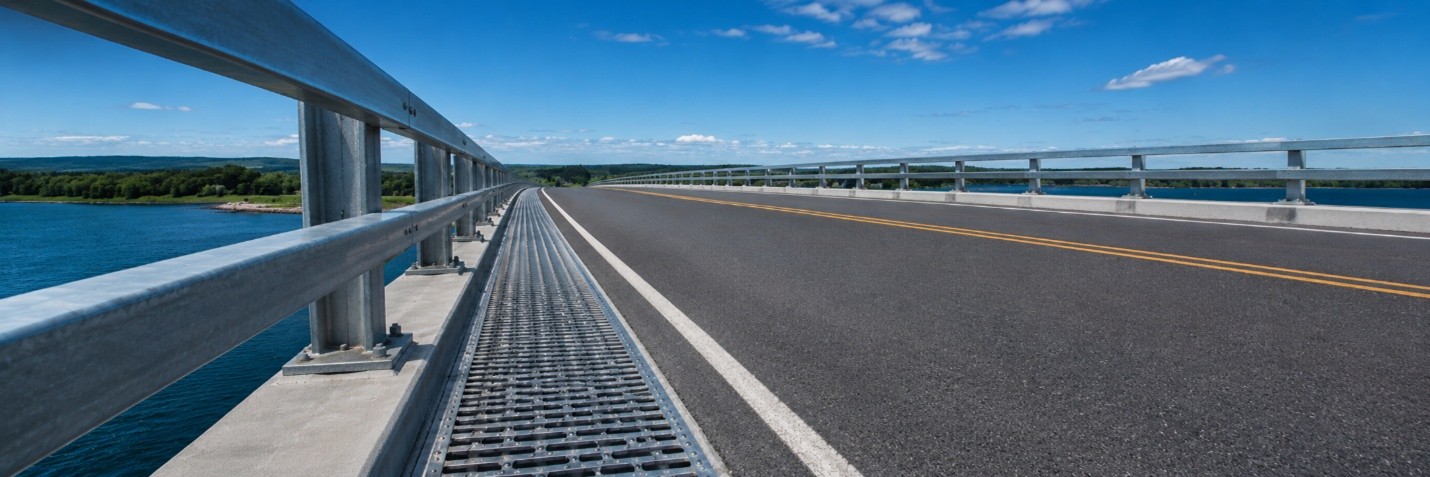
Riveted roadway drainage uses open metal grating with riveted connections to help water pass through while supporting heavy traffic, vibration, and demanding roadway conditions.
Riveted roadway drainage is used in places where water management and strength both matter. These systems use open metal grating to let rain, snow, slush, and debris pass through while supporting vehicles, equipment, and pedestrians.
For municipalities, contractors, engineers, and facility managers in Ontario, the challenge is often the same: how do you keep a roadway, bridge, or industrial access route safe without creating drainage problems or weak points?
This article explains how riveted roadway drainage works, why riveted construction is useful, and where it is often a good fit.
Built for Strength and Movement
Riveted grating is made by fastening connecting bars to bearing bars with rivets. This creates a strong mechanical connection across the panel. The design is well suited to areas that face repeated traffic loads, vibration, and movement.
That matters in roadway and bridge environments. Cars, trucks, maintenance vehicles, and heavy equipment can put constant stress on a surface. A grating system must be able to carry those loads while maintaining its shape and performance over time.
With riveted roadway drainage, the open surface also helps move water away instead of letting it collect on top.
Drainage Helps Improve Safety
Poor drainage can quickly become a safety issue. Standing water can reduce traction, hide surface hazards, and freeze during colder weather. In southern Ontario, freeze-thaw cycles, road salt, snow, and rain all place extra demands on roadway materials.
Open grating helps reduce:
- Pooling water on traffic surfaces
- Ice buildup in cold conditions
- Slush and debris collection
- Long-term wear around drainage areas
Riveted roadway drainage can be especially useful where surface safety, runoff control, and heavy traffic all need to work together.
Best-Fit Applications
Riveted grating is commonly considered for demanding infrastructure and industrial environments. It may be used in:
- Bridge decks and approaches
- Industrial roadways
- Municipal drainage channels
- Transit and maintenance areas
- Heavy-use service routes
Borden produces a complete line of gratings in riveted, pressure locked, squeeze locked, and resistance welded construction. Materials include carbon steel, aluminum, and stainless steel alloys, allowing project teams to match the product to the site conditions.
Key Considerations
Before choosing riveted roadway drainage, confirm the expected traffic load, span, drainage capacity, slip resistance needs, and exposure to moisture, salt, or chemicals. Some projects may also require engineering review, municipal approval, or accessibility considerations.
The right grating should support both drainage and long-term structural performance.
Quick FAQ
Riveted roadway drainage refers to open roadway grating with riveted construction that supports traffic loads while allowing water, slush, and debris to drain through.
It is often used on bridge decks, industrial access roads, municipal drainage areas, and heavy-use service routes.
Riveted grating offers strength, fatigue resistance, lateral support, and open drainage performance for demanding roadway environments.
Next steps
Riveted roadway drainage is a strong option for roads, bridges, and industrial sites that face heavy loads, vibration, and water exposure. It helps support safer surfaces while allowing runoff and debris to move through the grating.
To compare options, review Borden’s roadway gratings or read the full guide to roadway gratings in Canada. For help selecting a product for your project, get in touch with Borden Gratings