
Pressure Locked Grating for Industrial and Infrastructure Projects
Introduction
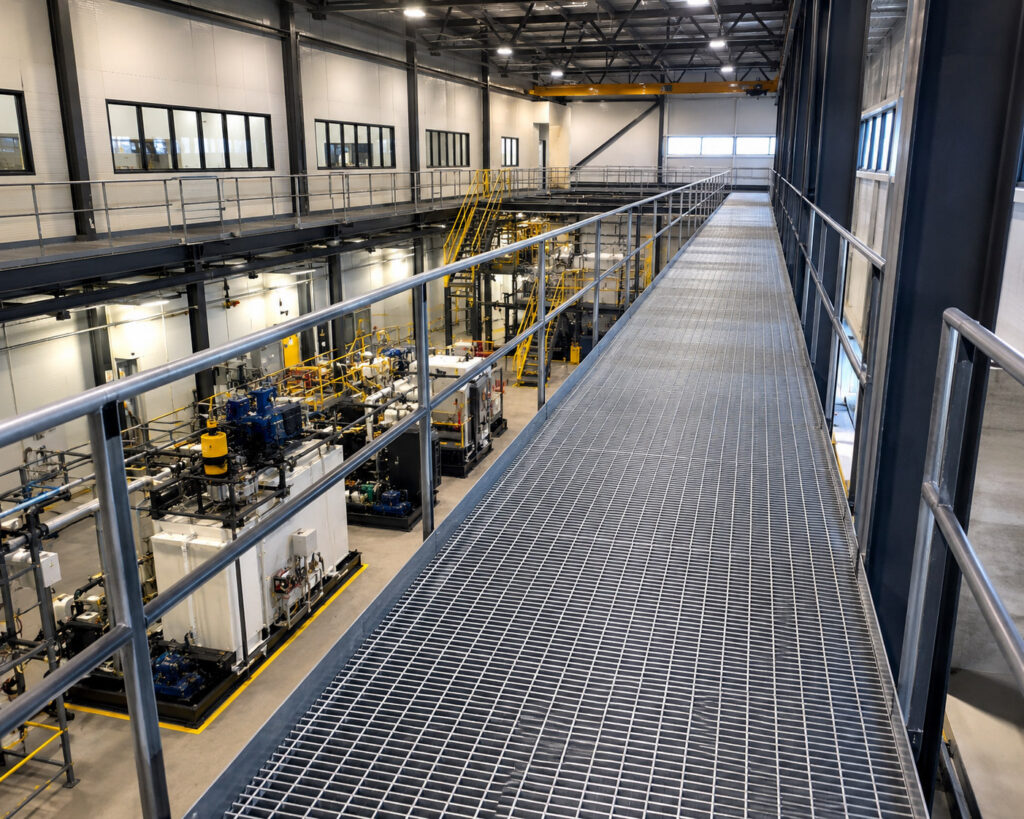
Pressure locked grating provides this functionality without the weight of solid flooring. Available in various metals, bar sizes and spacing options, it offers dependable performance, design flexibility and a clean appearance for platforms, walkways, stairs, screens and mezzanines.
Table of Contents

The Challenge of Choosing the Right Grating System
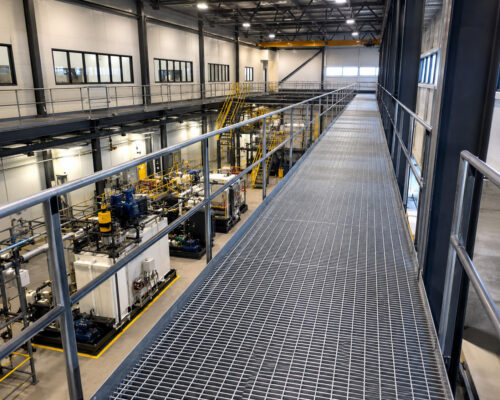
Grating may look like a simple building component, but it often performs several jobs at once. It may need to support workers, equipment or rolling loads while also providing drainage, ventilation and access to the area below.
A poor choice can create problems long after construction is complete. The grating may feel unstable, allow objects to fall through openings, wear too quickly or require more maintenance than expected. It may also look out of place in a public or architectural setting.
Facility managers, engineers and contractors therefore need to consider more than basic panel dimensions. They must look at how the grating will be used, what it will be exposed to and how it will connect to the surrounding structure.
Common project concerns include:
- Supporting the expected pedestrian, equipment or vehicle loads
- Providing a stable and comfortable walking surface
- Managing rain, snow, water, dirt or process debris
- Reducing corrosion in wet or chemically exposed areas
- Allowing air and light to pass through the surface
- Matching the appearance of nearby architectural features
- Creating removable access to equipment or services
- Meeting project-specific safety and engineering requirements
The best grating system is not simply the strongest available option. It is the one that provides the right balance of strength, spacing, material, appearance and service life for the application.
What Is Pressure-Locked Metal Grating?
This style of grating is made from two sets of metal bars. The main load-carrying bars are called bearing bars. Cross bars are inserted at regular intervals to connect and stabilize them.
During manufacturing, precisely slotted bars are placed together and pressed under high pressure. The process creates a permanent mechanical connection between the bearing bars and cross bars. Unlike resistance-welded grating, the components do not depend on a welded joint at every intersection.
The result is a rigid grid with straight lines and consistent spacing. Because the bars can be arranged in different configurations, the system offers considerable design flexibility.
The size and depth of the bearing bars can be selected to suit the required span and load. Cross-bar spacing can also be adjusted to create larger or smaller openings. This makes it possible to design grating for industrial access areas, pedestrian routes, architectural screens and many applications in between.
The Core Benefits of Pressure Locked Grating
Strong Lateral Support
The cross bars are mechanically locked into the bearing bars. This connection helps keep the bars aligned and provides lateral stability across the panel.
Proper support is still essential. The required bearing bar size, panel depth and support spacing must be determined according to the project load and span. However, the locked construction creates a stable panel that performs well in many walking, working and access applications.
A Clean, Uniform Appearance
One of the most recognizable benefits is its orderly appearance. The consistent grid and smooth lines can work well in spaces where the grating will remain visible.
This can be important in:
- Transit facilities
- Public buildings
- Commercial developments
- Institutional properties
- Rooftop mechanical areas
- Architectural façades
- Pedestrian bridges
- Landscaped public spaces
In these settings, the grating is not hidden inside an industrial process area. It becomes part of the visible design.
Flexible Bar Spacing
Different projects require different openings. A maintenance platform may need open space for drainage and airflow. A public walkway may need narrower openings to improve pedestrian comfort or reduce the chance of small objects passing through.
Bar size and spacing can be adjusted to address these needs. Close spacing may be helpful in areas used by the public, while more open configurations may suit ventilation, drainage or equipment-access applications.
The appropriate spacing should be selected with the expected users, environment and applicable project requirements in mind.
Drainage and Ventilation
The open grid allows water, air, light and some debris to pass through the surface. This can make metal grating useful where a solid floor would trap water or block airflow.
Outdoor platforms can shed rain and melting snow. Mechanical spaces can maintain ventilation. Indoor process areas can allow liquids to drain away from walking surfaces, provided suitable collection or drainage systems are installed below.
An open surface may also reduce the buildup of loose material. However, it does not eliminate the need for cleaning, snow removal or regular inspections.
Material Choice
Pressure locked grating can be produced in several metals and finishes. This allows the material to be matched to the environment instead of relying on one solution for every project.
The main options include carbon steel, galvanized steel, aluminum and stainless steel. Each has its own strengths, weight, corrosion resistance and maintenance needs.
Custom Fabrication
Industrial and infrastructure projects rarely consist of perfectly square, identical openings. Grating may need to fit around columns, pipes, drains, equipment bases and changes in elevation.
Panels can be fabricated to suit project drawings, including cut-outs, banding and other details. Careful planning can reduce field modifications and help installers achieve a cleaner result.
Common Applications Across Southern Ontario
Southern Ontario has a wide mix of manufacturing plants, warehouses, water facilities, transit systems, energy operations, institutional properties and commercial developments. Each sector uses grating differently.
Industrial Platforms and Walkways
Manufacturing and processing plants often need elevated access to machinery, valves, conveyors and service areas. Open grating can provide a durable walking surface without blocking ventilation, light or sprinkler coverage.
It may be used for:
- Equipment platforms
- Catwalks
- Maintenance walkways
- Mezzanines
- Conveyor access
- Service corridors
- Stair landings
The grating must be designed for the expected loads, including workers, tools, carts and any equipment that may be placed on the platform.
Water and Wastewater Facilities
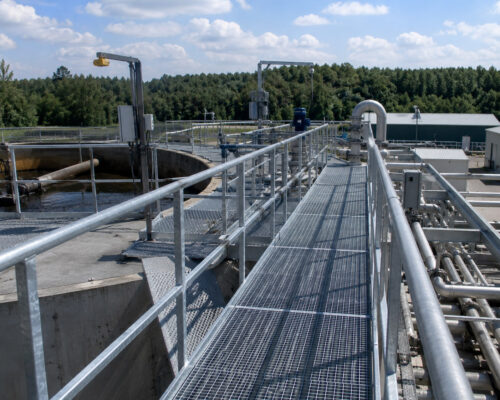
Water treatment and wastewater facilities contain damp, humid and sometimes chemically aggressive environments. Grating is frequently used around tanks, channels, pumps and treatment equipment because it provides access while allowing water to pass through.
Material selection is especially important. The designer should consider continuous moisture, cleaning chemicals, treatment processes and the possibility of corrosive exposure.
Municipal and Transit Infrastructure
Municipalities and transit authorities may use grating in stations, maintenance facilities, drainage structures, utility areas and pedestrian routes.
These applications can require a careful balance of durability and public safety. Opening size, slip resistance, edge conditions, fastening and accessibility may all influence the final specification.
Commercial and Institutional Facilities
Hospitals, universities, recreation centres, office developments and large commercial properties contain extensive mechanical and service areas. Grating can be used around rooftop equipment, utility spaces, service corridors and building systems.
In these environments, lighter materials or visually refined configurations may be preferred, particularly when panels must be moved for maintenance or can be seen from occupied areas.
Architectural Screens and Sunshades
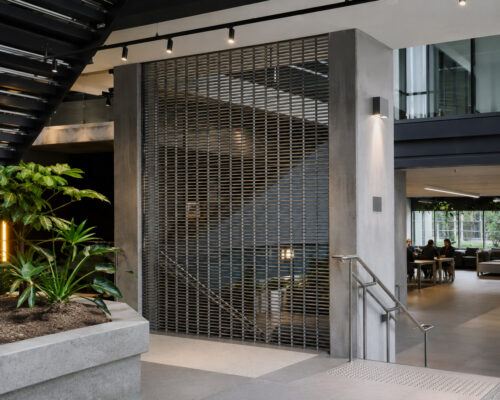
Metal grating is not limited to flooring. Its straight lines and regular spacing can also support architectural applications.
It may be installed vertically or horizontally as:
- Façade screens
- Equipment screens
- Sunshades
- Ventilation panels
- Security barriers
- Decorative partitions
- Ceiling features
The selected spacing can control visibility, shade and airflow while creating a consistent design element.
Heavy Industry and Energy Projects
Steel processing, mining support, bulk material handling, power generation and other heavy industrial operations can expose grating to demanding loads and harsh conditions.
The design team must consider vibration, concentrated loads, corrosion, temperature, impact and maintenance access. In especially demanding areas, another construction style or a heavier grating system may be more appropriate. The application should be reviewed rather than assuming one grating type will suit every location.
Choosing the Right Material
Carbon Steel
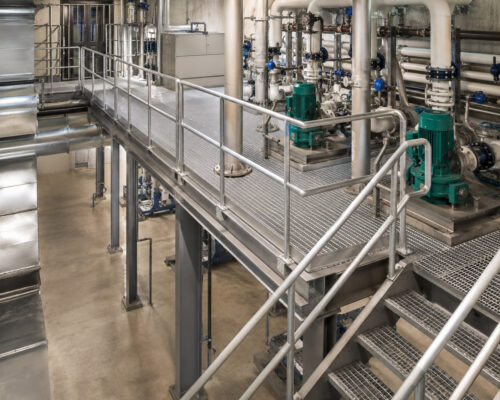
Carbon steel is widely used for indoor industrial platforms, walkways and general-purpose applications. It offers strength and can be fabricated in a range of sizes.
Untreated carbon steel can corrode when exposed to moisture, so the environment and protective finish must be considered. Painted or coated steel may be appropriate in some controlled locations, but coatings require inspection and maintenance.
Galvanized Steel
Galvanizing applies a protective zinc coating to steel. It is commonly selected for outdoor structures and damp environments where greater corrosion protection is needed.
Galvanized steel is often used for:
- Exterior platforms
- Rooftop access
- Municipal facilities
- Loading areas
- Utility structures
- Industrial walkways
The service environment should still be reviewed carefully. Certain chemicals and highly corrosive conditions may require a different material.
Aluminum
Aluminum is lighter than steel and naturally resistant to corrosion in many environments. Its lower weight can make panels easier to move during maintenance and may reduce the load placed on the supporting structure.
It can be a useful option for architectural features, rooftop areas, water-related facilities and applications where frequent panel removal is expected.
The required span and load must be checked using information for the selected aluminum grating. Steel and aluminum panels with similar dimensions do not necessarily provide identical structural performance.
Stainless Steel
Stainless steel is used where corrosion resistance, hygiene or long service life is especially important. Common applications include food processing, chemical facilities, water treatment, pharmaceutical environments and exposed architectural areas.
The grade of stainless steel should be selected according to the substances and conditions it will encounter. The word “stainless” does not mean the material is immune to every form of corrosion.
Key Design and Specification Factors
Choosing a material is only one part of specifying pressure locked grating. The design team should examine the complete operating environment.
Load and Span
Start by identifying the loads the grating must support. These may include pedestrians, maintenance carts, stored materials, equipment or vehicles.
The clear span between supports has a major effect on performance. A grating panel that performs well over a short opening may not be suitable across a longer span.
Load tables and engineering information should be used to select the correct bearing bar size and configuration. Concentrated loads, such as equipment legs or cart wheels, may require special attention.
Bearing Bar Direction
Bearing bars carry the load between structural supports. They must run in the correct direction.
This sounds basic, but it is one of the most important installation details. The drawings, panel marks and support layout should make the intended bearing direction clear.
Open Area and Bar Spacing
Spacing affects drainage, airflow, light, visibility and pedestrian comfort. Smaller openings may offer a more comfortable surface in public areas and may reduce the passage of small objects.
More open configurations may improve airflow and drainage while reducing material weight. The right choice depends on what is above, below and around the grating.
Slip Resistance
Smooth metal can become slippery when exposed to water, oil, ice or process residue. The need for a slip-resistant surface should be assessed during design, not after installation.
The best approach may include a specialized surface treatment, appropriate footwear policies, drainage, housekeeping procedures or a combination of controls.
Corrosion Exposure
Consider every substance the grating may contact, including:
- Rain and melting snow
- Road salt
- Cleaning agents
- Process chemicals
- Wastewater
- Food products
- Oils and lubricants
- Airborne industrial contaminants
Coastal exposure is not the only source of corrosion. Southern Ontario facilities can face road salt, humidity, industrial chemicals and frequent freeze-thaw conditions.
Panel Size and Access
Larger panels can reduce the number of joints, but they may be harder to transport, install or remove. Smaller panels can simplify maintenance access but require more supports and fasteners.
Where panels cover valves, drains or equipment, the layout should allow maintenance staff to reach those components without removing an unnecessarily large section of flooring.
Support and Fastening
Grating depends on the supporting structure beneath it. The design should provide adequate bearing at panel ends and suitable framing around openings.
Fasteners help prevent movement, uplift and panel displacement. The type and number of fasteners will depend on the application, panel size and environmental conditions.
Loose or poorly fitted panels can become a safety risk even when the grating itself is structurally adequate.
Installation and Long-Term Maintenance
A good specification can still underperform if panels are installed incorrectly. Before installation, the supporting frame should be checked for dimensions, alignment and condition.
Installers should confirm:
- Bearing bars run between the correct supports
- Panels have adequate bearing
- Cut-outs match the approved drawings
- Edges and openings are properly finished
- Adjacent panels sit at a consistent elevation
- Required fasteners are installed
- Removable panels can be safely lifted and replaced
After installation, grating should be included in the facility’s inspection program. Look for loose fasteners, damaged bars, corrosion, coating failure, movement and changes to the supporting structure.
Dirt, snow, ice and process material should be removed when they affect drainage or walking safety. Panels should not be cut or altered in the field without confirming that the change will not reduce their capacity or stability.
Working With an Experienced Canadian Manufacturer
Grating selection often involves several connected decisions. Material, bar depth, spacing, span, load, finish and panel layout all affect the final result.
Since 1955, Borden Metal Products (Canada) Ltd. has manufactured bar-on-edge gratings at its facility in Beeton, Ontario. Borden produces a complete line of riveted, pressure-locked, squeeze-locked and resistance-welded gratings in carbon steel, aluminum and stainless-steel alloys.
This range allows project teams to compare construction styles and choose a product based on the actual application rather than trying to make one product fit every situation.
Early coordination can help facility managers, contractors, architects and engineers identify practical fabrication details before the grating reaches the site.
Quick FAQ
What is pressure locked grating used for?
It is used for platforms, walkways, mezzanines, stair landings, ventilation panels, screens and other industrial or architectural applications. Its clean appearance makes it especially useful where the grating will remain visible.
Is it suitable for outdoor use?
Yes, when the correct material and finish are selected. Galvanized steel, aluminum and stainless steel are common options for outdoor or moisture-exposed environments.
Can it support heavy loads?
It can provide strong load-carrying performance when properly designed. Capacity depends on the bearing bar size, spacing, span, material and type of load. Project-specific load tables or engineering review should be used.
Is pressure-locked grating the same as welded grating?
No. Pressure-locked construction uses precisely slotted bars that are mechanically pressed together. Welded grating uses resistance welding to connect cross rods and bearing bars. Each construction style has applications where it may be the better fit.
How do I choose the right spacing?
Consider pedestrian use, drainage, airflow, object passage, visibility and applicable project requirements. Narrow openings may be preferred in public walking areas, while more open configurations may suit industrial drainage or ventilation.
Plan Your Next Grating Project
The right grating system can provide safe access, dependable structural performance and effective drainage or ventilation for many years. The key is to consider the full application, including loads, spans, environmental exposure, users, maintenance needs and appearance.
Borden Metal Products has been manufacturing dependable Canadian grating products for industrial, commercial, municipal and infrastructure projects since 1955.
Contact us to book a consultation and discuss the requirements of your next project.
Learn more about our pressure locked bar grating.
For additional information about municipal and transportation applications, read A Guide to Roadway Gratings in Canada