
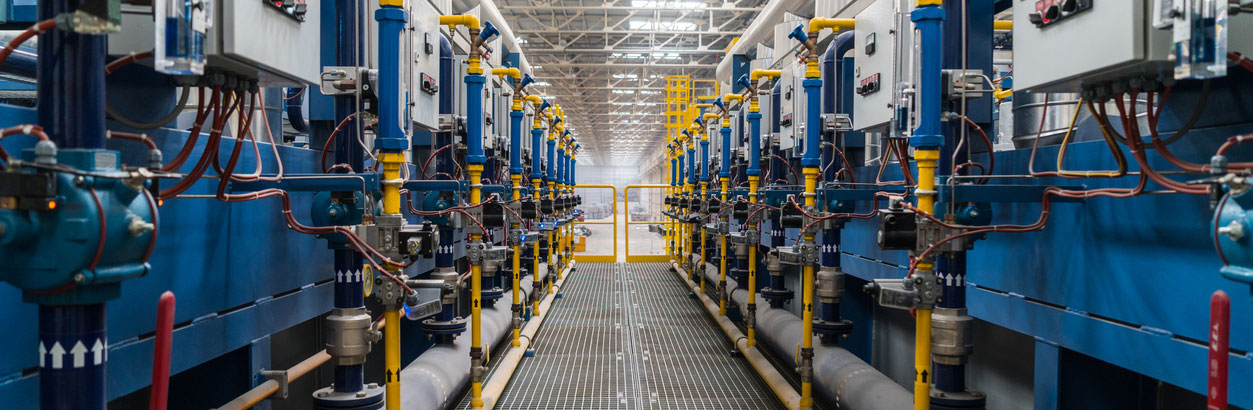
Riveted aluminum bar grating compared to swaged and pressure-locked styles, including rigidity, vibration performance, and typical uses.
These terms describe how the cross bars connect to the bearing bars. The connection style affects appearance, stiffness, and typical use cases. It can also affect how the grating behaves under vibration and repeated use.
Swaged aluminum bar grating
Swaged grating uses a connection method that mechanically joins cross bars to bearing bars. In many industrial settings, swaged aluminum grating is common because it provides a solid panel feel and is widely available in standard configurations.
It’s often selected for:
- Industrial walkways and platforms
- Mezzanines and equipment access areas
- General-purpose service surfaces
Pressure-locked aluminum bar grating
Pressure-locked (often called press-locked) grating uses a tight mechanical fit between members. It is often chosen for a clean, consistent look and is common in architectural and commercial applications where appearance matters.
It can be a good fit for:
- Commercial and institutional facilities
- Public-facing infrastructure areas
- Projects where the grating is visible and aesthetics matter
Riveted aluminum bar grating
Riveted grating uses rivets as part of its connection method and is often associated with heavier-duty performance in certain applications. It may be considered where extra rigidity is desired and where vibration or dynamic loads are a concern.
It can be a good fit for:
- High-traffic industrial access routes
- Areas with vibration from equipment
- Heavier-duty platform applications
How to choose between them
Most teams choose based on a few practical questions:
- Is this mostly industrial and hidden, or visible and architectural?
- Is vibration an issue near equipment?
- Are panels removed often for access?
- Do you want a panel feel that is more rigid underfoot?
- Are you matching an existing system on site?
For many industrial projects, availability and standardization matter too. Using one type consistently across a facility can simplify replacement and maintenance later.
FAQs
Riveted aluminum bar grating is a type of grating where the bars are connected using rivets, creating a strong, rigid panel.
It’s often chosen for higher-traffic areas or places with vibration or dynamic loads where you want a more rigid feel underfoot.
Riveted grating focuses on rigidity and durability, while swaged is a common general-purpose industrial option and pressure-locked is often chosen for a cleaner, more uniform loo
Next Steps
If you’re planning a new build or upgrading an existing facility, the best next step is to confirm what matters most for your site—environment, load requirements, access needs, and any safety or accessibility considerations.
For a broader overview, read our Guide to Aluminum Bar Gratings, where we pull everything together in one place and help you compare options at a high level. If you’d like a second set of eyes on your application, get in touch today to book a consultation.
Our team can review your goals and site conditions and help you narrow in on a bar grating solution that fits how the space will actually be used.