
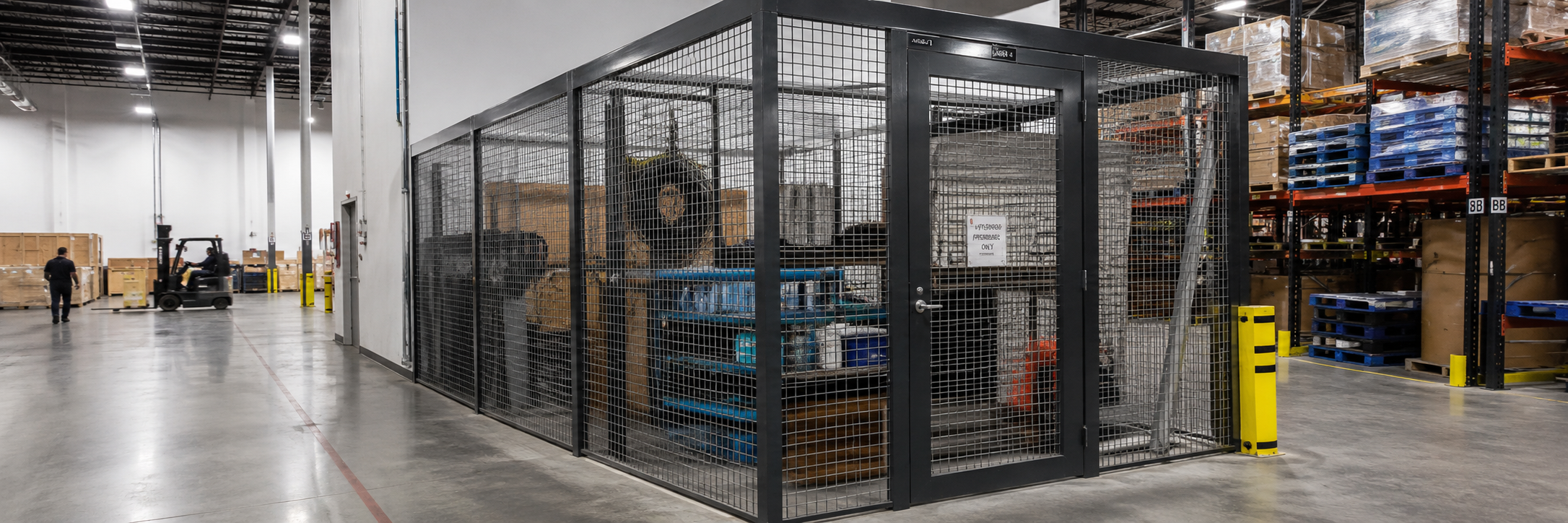
Security grating does not always need to block a space completely. In many industrial, commercial and municipal buildings, the goal is to limit access while still allowing visibility, airflow and light.
Pressure locked security grating can be used for barriers, equipment screens, storage cages and controlled-access enclosures. Its clean grid pattern and strong mechanical construction make it useful in areas where safety, durability and function all matter.
Protecting Equipment and Restricted Areas
Many facilities have areas that should only be accessed by trained staff. This may include mechanical rooms, utility spaces, electrical equipment, pumps, valves, rooftop systems or service corridors.
Pressure locked security grating can help separate these zones from public or general-use areas without making the space feel fully closed off. It provides a visible boundary while still allowing maintenance teams to see into the area.
Common applications include:
- Equipment cages
- Utility room barriers
- Mechanical area screens
- Storage enclosures
- Controlled-access walkways
- Protective partitions
Keeping Visibility, Airflow and Light
Solid walls can create problems in service areas. They may restrict ventilation, reduce sightlines or make routine inspections harder. Open metal grating can help solve that.
Bar spacing affects how the enclosure performs. Wider spacing may allow more visibility and airflow. Closer spacing may help reduce reach-through access and create a stronger sense of separation.
This balance is important in buildings where security and service access need to work together.
Choosing Materials and Finishes
Material selection depends on where the grating will be installed. Carbon steel may suit many protected indoor areas. Galvanized steel is often considered for damp, exterior or rooftop applications. Aluminum can reduce weight, while stainless steel may be selected for corrosive or high-visibility environments.
Pressure locked security grating should also be reviewed for finish, appearance and long-term maintenance, especially in public-facing or institutional buildings.
Key Considerations for Secure Installation
A grating barrier is only as good as its framing and attachment. Fasteners, posts, hinges, access panels and connection points should be selected with the use of the space in mind.
Design teams should consider tamper resistance, service access, emergency access, panel size, inspection needs and any applicable building or safety requirements.
Secure the Area Without Closing It Off
Pressure locked security grating gives facilities a practical way to protect restricted areas while keeping spaces visible, ventilated and serviceable. With the right spacing, material and framing, it can support both safety and day-to-day building operations.
Borden Metal Products has manufactured bar-on-edge gratings in Beeton, Ontario, since 1955.
Discuss Your Grating Requirements
Review Borden’s pressure locked grating options to learn more about available configurations.
Read the complete guide to pressure locked grating for a broader overview of applications and selection.
Contact us to discuss your project requirements with the Borden team.
FAQ rapide
It is commonly used for equipment cages, mechanical room screens, utility barriers, storage enclosures and controlled-access areas.
Yes. The open grid can maintain airflow and visibility while still creating a secure physical boundary.
Bar spacing, framing, fasteners, hinges, access hardware and material choice all affect how well the grating controls access.