
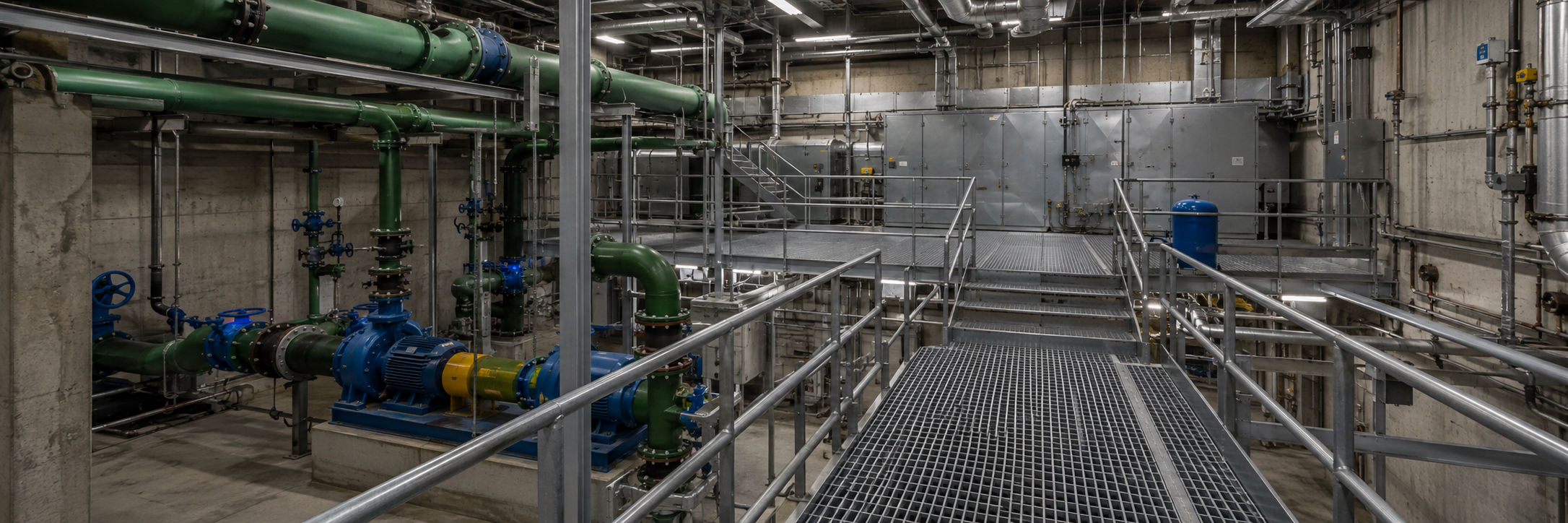
Commercial mechanical rooms are busy spaces. They often contain pumps, piping, HVAC units, valves, ducts and electrical equipment in a tight layout. Maintenance teams need safe access without blocking ventilation, drainage or service routes.
Press locked grating can help create elevated walkways, platforms, stairs and landings around important building systems. It provides a strong open-grid surface while allowing air, light and water to pass through. For commercial and institutional buildings in Southern Ontario, this can support safer maintenance and more practical day-to-day operations.
Creating Safe Access Around Equipment
Mechanical rooms are not always designed with open floor space. Equipment may be raised, tucked behind piping or placed near walls and columns. Grating platforms and walkways can help technicians reach these areas more safely.
Press locked grating may be used for:
- Service platforms around pumps and HVAC equipment
- Catwalks above piping or ductwork
- Stair treads and landings
- Access routes to valves and controls
- Raised areas around building systems
The goal is to create clear access without making the room harder to service.
Supporting Ventilation, Drainage and Visibility
A solid floor can trap water, block airflow or make it harder to see equipment below. Open grating allows moisture, condensation and light debris to pass through, depending on the layout below.
In mechanical rooms, this can be helpful near chilled water systems, humid areas, drains or rooftop mechanical spaces. It can also improve visibility for inspections, since staff may be able to see piping, supports or floor areas below the walking surface.
Designing Around Real Room Conditions
Mechanical rooms often require custom planning. Grating may need to fit around pipes, columns, equipment bases, drains or wall-mounted systems. Removable panels can also be useful where equipment or valves need future access.
Material selection matters as well. Carbon steel may suit dry indoor areas. Galvanized steel may be considered where moisture or condensation is present. Aluminum can reduce panel weight, while stainless steel may suit more corrosive or high-visibility spaces.
Key Considerations for Maintenance
Press locked grating should be included in regular facility inspections. Teams should check for loose fasteners, movement, damaged bars, corrosion, coating wear and buildup of dirt or debris.
Designers should also consider panel weight, fastening method, bearing bar direction and safe lifting access for removable sections.
Make Mechanical Rooms Easier to Work In
The right grating layout can make a mechanical room safer, cleaner and easier to maintain. By planning for access, drainage, ventilation and future service needs, press locked grating can support both building operations and long-term reliability.
Borden Metal Products has manufactured bar-on-edge gratings in Beeton, Ontario, since 1955.
Discuss Your Grating Requirements
Review Borden’s pressure locked grating options to learn more about available configurations.
Read the complete guide to pressure locked grating for a broader overview of applications and selection.
Contact us to discuss your project requirements with the Borden team.
FAQ rapide
It is commonly used for walkways, platforms, stairs, landings and access areas around pumps, piping, HVAC equipment, valves and controls.
Yes. Removable panels can be planned into the design to allow future access to equipment, drains, piping or service points below the grating.
The best material depends on moisture, condensation, corrosion exposure, weight and maintenance needs. Carbon steel, galvanized steel, aluminum and stainless steel may all be considered.