
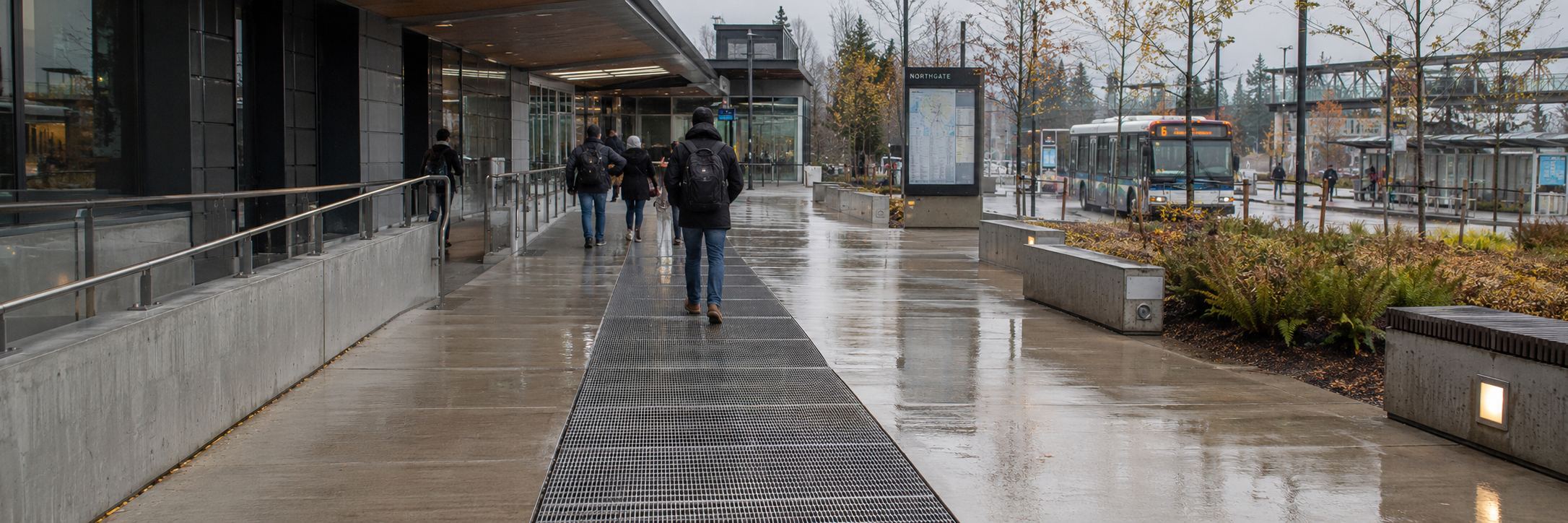
Slip-resistant bar grating improves traction on pedestrian surfaces by adding a textured or serrated surface where wet, icy, or dirty conditions can make walking more difficult.
Why Outdoor Walkways Need More Traction
Outdoor walking surfaces deal with conditions that indoor floors rarely face. Rain, melting snow, ice, mud, and debris can all reduce traction, especially around entrances, transit facilities, industrial sites, and public walkways.
That is where slip-resistant grating can help. Metal grating already allows water and melting snow to pass through its openings. Adding an enhanced traction surface can provide another level of protection where conditions are regularly wet or demanding.
Look at How the Area Is Used
Not every outdoor walkway faces the same risks. A covered commercial entrance may stay relatively dry, while an exposed industrial walkway can see snow, rain, and tracked-in dirt throughout the year.
Before choosing a surface, consider:
- How much pedestrian traffic the area receives
- Whether it is exposed directly to weather
- Whether oils, dirt, or other contaminants may be present
- How snow and ice are removed
- Whether carts or maintenance equipment also use the surface
These conditions help determine whether standard grating or slip-resistant grating is the better fit.
Understand the Surface Options
One common way to improve traction is to add serrations to the walking surface. Borden sidewalk grating is available with a mechanically punched serrated finish designed to provide additional grip.
For more demanding applications, Borden also offers ALGRIP® Slip-Resistant Technology. ALGRIP can be applied to aluminum, stainless steel, and carbon steel grating and is intended for environments where wet, oily or dusty conditions can create walking hazards.
The right option depends on the operating environment rather than simply choosing the most aggressive surface.
Remember That Drainage Still Matters
Traction is only one part of outdoor walkway design. Grating spacing and the area below the panels must allow water to drain effectively. Leaves, snow, ice, and debris also need to be managed through regular maintenance.
Even slip-resistant grating cannot eliminate every winter hazard. Proper drainage, snow removal and inspection remain important parts of maintaining a safe walking surface.
Choose for the Full Environment
For Ontario facilities, freeze-thaw cycles, snow, and de-icing materials should all be considered when specifying exterior grating. Material, surface treatment, load requirements, drainage, and corrosion exposure need to work together.
Borden has manufactured bar-on-edge grating in Beeton, Ontario, for more than 70 years, with products available in carbon steel, aluminum, and stainless steel.
Explore Borden’s sidewalk grating options, read our complete sidewalk grating guide [LINK COMING SOON], or contact Borden to discuss slip-resistant grating for your outdoor walkway.
Quick FAQ
Traction can be improved by adding serrations or a specialized slip-resistant surface to the areas that come into contact with footwear.
It can be. Serrated surfaces provide additional grip and may be useful in locations regularly exposed to rain, snow, dirt, or other conditions that reduce traction.
No. Open grating can help water and melting snow drain through the surface, but ice can still form. Winter maintenance and proper drainage remain necessary.